
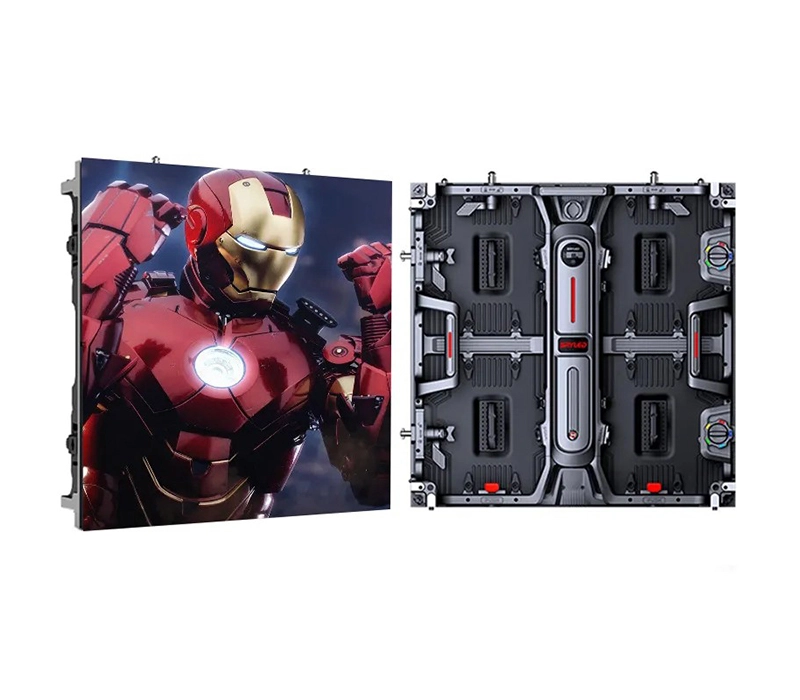
Business events rarely happen in identical rooms. A product launch may need a wide stage backdrop, while a conference may need two side screens, a confidence monitor, and a display that can be packed away the same evening. A permanent LED installation can handle some of these jobs, but it is often more screen than a single event requires. LED panel rental gives organizers a modular way to match the display to the venue, audience and program without committing to a fixed structure.
The value is not simply a lower upfront cost. A well-planned rental system can be resized, transported, installed and reused across conferences, exhibitions, awards nights, roadshows and live presentations. The practical question is whether the supplier can match the panel system, control path, structure and service plan to the event.
Rental systems are built around repeated setup and dismantling. Standard cabinets can be combined into different widths and heights, so the same inventory may support a compact booth wall one week and a larger stage display the next. These modular LED panels are useful when event layouts, viewing distances or branding requirements change from venue to venue.
The format also supports more than a flat background. Depending on the selected cabinet and structure, an event LED wall may be ground-stacked, flown, built as a corner screen or integrated into a curved stage design. Folded or corner screens can support XR and virtual scenery, while creative formats such as columns or special shapes need a separate engineering review. A standard rental product is usually the sensible starting point, but unusual geometry should be priced as a project rather than treated as a simple add-on.
Portability has a trade-off. Quick locks, alignment hardware, integrated cabling and flight cases make repeated transport easier, but they add cost and weight. Lightweight cabinets may speed up crew work, yet a large display still needs safe rigging, a stable ground stack or a properly designed support structure. The right system balances handling speed with structural safety and image quality.
At a conference the screen carries slides. It carries schedules, and carries live camera feeds. People sit close. A fine pixel pitch matters then, and low-light grayscale matters too. A high peak brightness does not help indoors. Too much light washes out faces, and washes out slides. A fine-pitch indoor panel keeps detail in the dark, and it usually fits a conference better.
A trade show pushes layout flexibility harder. A modular wall fits a booth footprint, which makes a strong brand backdrop. It runs product video while the stand stays open. The wall can split into a main area, and it can carry side screens too. That helps when the room needs two viewing angles. Visitors who stand close change the choice, and the pitch must suit the room. The screen size comes in next. So do the resolution and the budget, and do not pick a pitch from a number alone.
Awards nights and roadshows need fast changeovers, and they need clean camera shots too. Reference refresh rates come at a few points. One sits at 1,920 Hz. Another at 3,840 Hz. A third at 7,680 Hz. A printed number does not guarantee clean footage. The scan ratio shows in the frame, and the driver ICs show too. The shutter and color calibration do as well. When a crew films the wall, timing and latency appear in the cut.
A quote only means much once the event is set. The room comes first. Its width sets the wall, which height sets the wall too. The viewing distance sets the pitch, and then the light enters the plan. Daylight pulls the spec one way, and interior light pulls it another. The rigging points and the service access follow. At the end, list what the screen must show. Slides pull the spec one way, live feeds pull it another, and XR content pulls it a third way.
Control mode shapes the workflow. Synchronous control follows a live source, which behaves like a monitor does. A presentation runs through it, and a stage feed runs through it too. Asynchronous control stores loops in a player, which plays them on a schedule. An unattended wall suits that. A sponsor rotation does too. For several screens, one console pushes content, which runs the playback. The network has to hold up, and the permissions have to be set right.
Plan the signal path before the crew arrives. Eighty meters is a common reference, which runs from the control seat to the wall. Fiber takes over past that point. The real limit rides on the interface, which rides on the cable grade too. The extender and the topology join in. Power, grounding, and phase balance each get a line. Check them one at a time. A venue with strict electrical rules needs that line by line, and most events do not get that care.

Price matters, which should not lead the comparison. The rental package lists what it includes, and cabinets comes in. Processors come in. Receiving cards come in, and light cases join the count. Power distribution joins it too. Rigging hardware counts, and installation labor counts. Tear-down counts as well. A cheap cabinet gets expensive later. Transport shows up after the quote. Structure and engineering does too.
See whether the supplier can explain the build-in project terms. A strong team asks about viewing distance first, which asks about the light next. It asks about the camera use, and about the signal routing. It does this before naming a cabinet, splits confirmed specs from general numbers. Brightness comes from the product documents. Refresh rate comes from them too. So does the viewing angle. Power, lifetime, and ingress protection do as well, and they never come from a generic promise.
Packing and service get the same care as the wall, good flight cases cut damage, and protective foam does too. Clear labeling does as well. A written install sequence cuts delays. SYVISO positions its rental LED display solutions for events and staging. The project selection follows the cabinet, which follows the install, and the control needs. Its wider LED display solutions cover the indoor formats. They cover the outdoor ones too. Fine-pitch falls in there. Creative builds and custom shapes join the list, and they step in when a standard wall falls short.
A supplier that carries the project to delivery is easier to work with. A seller that only quotes a panel is not. For a new program, review the rental performance display solution first. Then bring the venue to the project support team. Bring the schedule with it, and the content plan too.
LED panel rental fits when the display must move. It fits when the wall changes size, and one screen serves more than one event. It supports modular layouts, live content, and creative stage formats too. The screen avoids the fixed footprint of a permanent wall, and the panels reconfigure for a new room. The cabinet has to allow it, and the control plan has to allow it too. The pitch must match the viewing distance, and the brightness must suit the room. The structure has to stand, and the signal path has to run clean.
SYVISO is an LED display company based in Shenzhen, which formed in 2013. The core team has worked in the field for over 13 years. The company runs the R&D side, which runs the engineering side, and manufacturing. Customization comes from the same bench. Quality control comes from it too. So does the B2B support. A buyer comparing a rental screen starts with the venue dimensions. The destination and the budget range land before the final build. More background sits on the سيفيسو.
Q1: Is LED panel rental only for concerts?
A1: No. The same systems serve a conference. They serve a trade show, as a product launch. Awards nights join the list. Weddings and roadshows do. The build shifts with the viewing distance. Indoor and outdoor use pull it apart. The camera use changes it, the install method changes it, and the content changes it too.
Q2: What should you check before renting an LED screen?
A2: The size comes first, and the pixel pitch comes first too. Brightness joins them. The refresh rate follows. The camera needs to follow it. The control mode comes next. The signal distance comes next too. Power supply enters the list. The rigging enters it. The stack structure does. Maintenance access rounds it out. The transport cases and the spares join at the end. The venue rules belong in the same pass.
Q3: Can one rental wall serve different layouts?
A3: Often, yes. The standard cabinets assemble into new dimensions, and they can ground-stack, hang, or take a selected curved or corner shape. Reuse depends on the cabinet design. It depends on the structural parts and the content resolution, the service access, and whether the next venue has matching power and rigging.
تواصل مع SXLED
هل أنت مستعد لتحويل رؤيتك إلى واقع؟ بصفتنا شريكك الموثوق في مجال شاشات LED، نقدم حلولاً مصممة خصيصاً لتناسب احتياجاتك، مع ضمان التوافق والأداء الأمثل لكل مشروع. املأ النموذج، وسيتواصل معك خبراؤنا لتقديم عرض سعر مخصص خلال 24 ساعة.

خبرة تزيد عن 13 عامًا

حلول مخصصة

ضمان جودة موثوق