

Choosing between an indoor led display and an lcd video wall looks simple until the project gets specific. Both can create a large digital canvas. Both can work in conference rooms, control centers, retail spaces, showrooms, and corporate environments. But they behave differently once screen size, viewing distance, content, room lighting, maintenance access, and budget enter the discussion.
That is why the useful question is not “Which technology is better?” It is “Which one still fits after the real project conditions are added?” When buyers search the difference between lcd and led display, they often find the same short comparison: LCD has bezels, LED is seamless, and LED costs more. Those points matter, but they do not tell a project team when the decision should actually change. A large brand wall, a CCTV monitoring room, and a boardroom presentation screen can reach different answers even when the available wall area is similar.
Start with the room, not the display catalogue.
The most useful early information is the available screen area, closest normal viewing distance, target content, ambient light, required resolution, installation depth, maintenance access, control method, and budget. These inputs narrow the choice much faster than comparing ten specification sheets.
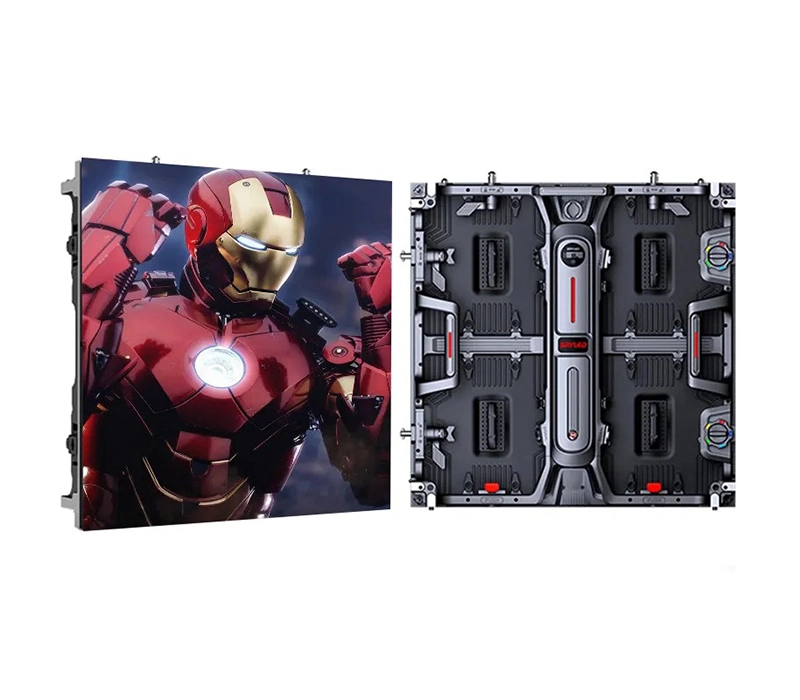
LED displays are modular, so the final screen can be configured around different dimensions and aspect ratios. That is useful when the wall opening is unusually wide, tall, or does not match a standard panel grid.
An lcd video wall is normally built from fixed-size LCD panels. That can work very well when the required wall dimensions fit the panel arrangement and visible joints do not interfere with the content.
Viewing distance changes the discussion.
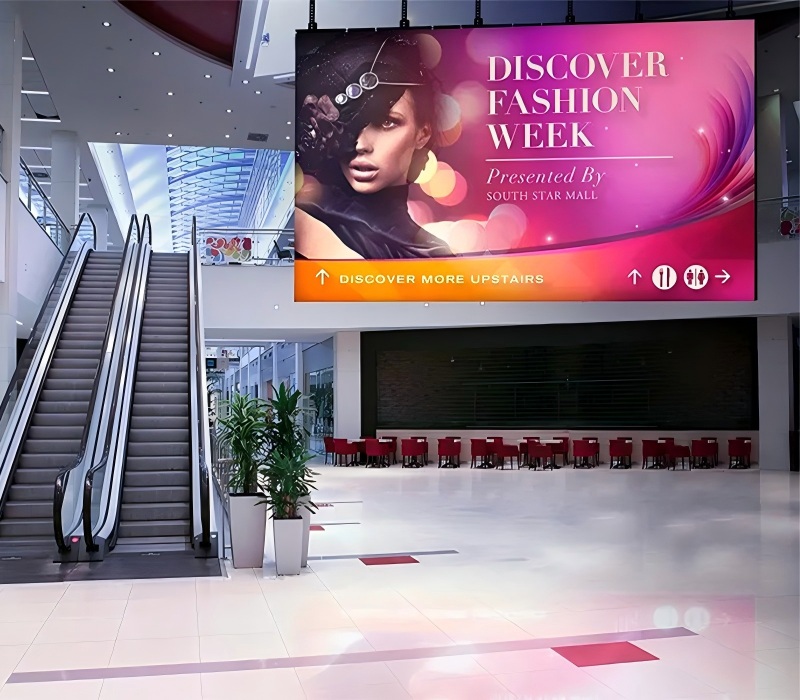
An indoor led video wall intended for a large lobby may be viewed mainly from several meters away. The same screen in a boardroom could have people sitting much closer. A smaller pixel pitch increases pixel density and supports closer viewing, but it should be selected together with screen dimensions, target resolution, and budget.
This is why buyers should review indoor LED display solutions with actual room dimensions instead of choosing pitch from a general rule.
Content is often the fastest way to decide whether seams matter.
If the wall mainly shows separate CCTV feeds, each camera window can be positioned inside an individual LCD panel. The physical grid may be acceptable because the content already has its own divisions.
Now change the content. Put a full-width map, product image, executive presentation, architectural drawing, or branded video across the same wall. Panel joints can cross faces, text, lines, and graphics.
An indoor led display creates a modular large-format surface with minimal visible boundaries between display areas. That becomes more valuable when content is expected to move freely across the whole canvas.
So the decision is not simply “seams are bad.” It is whether the content respects the panel grid.
“4K” is one of the easiest terms to misunderstand in a video wall quotation.
A system may accept a 4K input signal, but that does not automatically mean the physical display surface contains 3840 × 2160 native pixels.

Pixel pitch is the center-to-center distance between adjacent LED pixels. Once the screen dimensions and pitch are known, the approximate physical pixel count can be calculated.
For example, horizontal screen width divided by pixel pitch gives the approximate horizontal pixel count. The same calculation applies vertically.
That simple check matters because an indoor led video wall may be physically large but still have a native resolution below the incoming source resolution. The controller can scale the image, but scaling does not add physical pixels.
For rooms where users need to read small labels, spreadsheets, dashboards, maps, or detailed UI elements, native pixel density should be checked early.
No.
A finer pitch can provide more pixels in the same area, but it also changes project cost. If viewers are far enough away that they cannot benefit from the added density, the extra spend may create little visible value.
A better process is:
Define the screen dimensions. Measure the closest normal viewing distance. Identify the smallest important text or graphic detail. Set a realistic resolution target. Compare suitable pitch ranges and cost.
For close-viewing applications such as boardrooms, command centers, broadcast spaces, and premium commercial interiors, buyers can also review fine pitch LED options when higher pixel density is required.
Indoor displays spend much of their working life at lower brightness than outdoor screens. That makes low-brightness image quality a serious selection point.
A bright specification number may look impressive, but an indoor room does not usually need extreme brightness.
Meeting rooms, corporate lobbies, hotels, control rooms, and retail interiors need comfortable viewing. When an LED screen is dimmed, it should still retain tonal detail, stable colors, and clear dark areas.
This is where low-brightness/high-grayscale performance matters. Driver IC selection, bit depth, PWM behavior, calibration, and power stability all influence how well subtle image detail is preserved at reduced brightness.
An lcd video wall may already be familiar in controlled-light environments. When comparing it with LED, the buyer should not simply ask which system gets brighter. A better test is how both systems look at the brightness level the room will actually use.
Ask to see dark gradients, shadow detail, skin tones, small text, and low-light video rather than only bright promotional footage.
Look for:
smooth transitions between dark shades; stable white balance; consistent cabinet-to-cabinet color; readable small text; no obvious scan lines or flicker; comfortable brightness from the nearest seat.
This is especially relevant for an indoor led video wall used for executive presentations, monitoring, or premium visual content where viewers may sit close to the screen for long periods.
A wall that looks good on day one still needs to be serviced later.
That is where the difference between lcd and led display becomes more practical than visual.
LED systems use replaceable modules and internal components such as power supplies and receiving hardware. A project can be designed for front or rear maintenance depending on the selected configuration.
Front service is valuable when the display is mounted close to a finished wall and rear space is limited. The project team should still check access to modules, power supplies, receiving cards, cables, and the extraction path for each component.
Rear maintenance needs sufficient working space behind the wall.
For an lcd video wall, service planning also matters because individual panels, mounts, cables, and surrounding panels need room for access and replacement.
A few centimeters saved in the original wall design can become inconvenient later. Maintenance depth should be discussed before decorative finishes and supporting structures are finalized.
Once LED has been selected, the indoor environment can influence the packaging choice.
Standard SMD remains widely used. In spaces where the display is more exposed to accidental contact, dust, or moisture, GOB can add a protective encapsulation layer over the mounted LED surface.
COB integrates LED chips directly on the PCB and provides a protected surface, making it relevant to fine-pitch and demanding indoor projects. Protected surfaces can also change reflection behavior, so ambient lighting and screen position still matter.
For public-facing interiors where extra surface protection is useful, SYVISO’s GOB LED display provides another configuration route without changing the wider project-first selection logic.
Price comparisons become misleading when one quotation contains only display hardware and another includes control equipment, mounting, service access, spare parts, or technical support.
An indoor led video wall price should therefore be read as a project configuration, not just a square-meter figure.
Common cost drivers include:
total screen area; pixel pitch; resolution target; cabinet configuration; front or rear maintenance; control system; installation structure; customization; spare parts; project documentation and support.
A finer pitch usually means more pixels in the same display area. A non-standard wall may require a different cabinet arrangement. Tight installation depth can influence the maintenance design.
That explains why two indoor led video wall price quotations for the same wall size can still differ significantly without either quotation being directly comparable on hardware area alone.
A useful RFQ should include:
room type; screen width and height; closest viewing distance; content type; required aspect ratio or resolution; installation method; available maintenance space; control requirements; quantity; destination; project schedule.
With those details, project support can focus on a configuration that matches the room rather than producing a generic screen estimate.
There is no need to force every project toward one technology.
| Project condition | LCD video wall may fit well | Indoor LED display becomes stronger |
| Small or moderate wall | Yes | Depends on project |
| Very large visual canvas | Panel grid required | Strong fit |
| Fixed CCTV windows | Often practical | Also suitable |
| Full-width maps or branding | Joints may cross content | Seamless canvas |
| Custom aspect ratio | Limited by panel layout | Flexible configuration |
| Very close viewing | Strong native pixel density | Fine pitch needed |
| Low-light room | Suitable | Check low-brightness grayscale |
| Premium lobby/showroom | Possible | Strong visual continuity |
| Limited rear access | Depends on mount | Front-service options |
| High-contact public area | Panel surface protection | GOB/COB options available |
This matrix also explains why the answer changes by application.
A control room displaying fixed camera groups can still find an lcd video wall practical. A corporate lobby carrying one continuous brand film places more value on seamless presentation. A boardroom needs close-view detail and comfortable low-brightness performance. A showroom may prioritize custom dimensions and a clean architectural fit.
The best indoor led display is therefore not the one with the smallest pitch or the longest feature list. It is the one whose configuration fits what people actually need to see.
SYVISO approaches LED display projects through application, viewing distance, dimensions, installation, maintenance, control, and budget rather than treating the screen as an isolated SKU.
The company is based in Shenzhen and was established in 2025. Its core team has more than 15 years of LED display industry experience. Current manufacturing capacity includes a 3,000 m² facility, more than 60 employees, eight production lines, and annual production capacity of 20,000 m².
For indoor projects, configuration can cover screen dimensions, aspect ratio, pixel pitch, cabinet structure, front or rear maintenance, installation details, control-system setup, and project documentation.
That flexibility is useful when an indoor led video wall must fit an existing architectural opening, meet a specific viewing distance, or support a resolution target that does not match a standard panel arrangement.
Buyers can review SYVISO LED solutions and then request a quote with the room dimensions, viewing distance, content, installation method, and budget range. Those details make the recommendation much more useful than asking for a screen price alone.
The choice between an indoor led display and an lcd video wall should come from the room, content, and operating needs.
LCD can remain practical where fixed panel layouts, close-range detail, and separated content windows fit the application. LED becomes more compelling when the project needs a seamless large canvas, flexible dimensions, close-view fine pitch, custom installation, or stronger visual continuity.
Before comparing indoor led video wall price, define viewing distance, native resolution, content layout, low-brightness performance, and maintenance access. Once those conditions are clear, the technology choice becomes much easier to defend technically and commercially.
Q1: What is the main difference between an LCD video wall and an indoor LED display?
A1: An lcd video wall uses multiple LCD panels, so physical panel joints remain between display sections. An indoor led display uses modular LED units to create a large surface with minimal visible boundaries. The practical importance of that difference depends on content, viewing distance, screen size, and application.
Q2: Is an indoor LED video wall always better for close viewing?
A2: Not automatically. An indoor led video wall needs a suitable pixel pitch and native resolution for the closest viewing distance. Fine-pitch LED can support close viewing well, while an lcd video wall also provides high pixel density. The decision should be based on text size, content detail, screen dimensions, and the nearest seat.
Q3: What affects indoor LED video wall price the most?
A3: Indoor led video wall price is influenced by screen area, pixel pitch, resolution target, cabinet and maintenance configuration, control system, installation structure, customization, and spare-parts requirements. A useful quotation should be based on the actual room and project scope rather than screen area alone.
Get in Touch with SXLED
Ready to bring your vision to life? As your trusted LED display partner, we offer tailored solutions, guaranteed compatibility, and optimized performance for every project. Fill out the form, and our experts will reach out with a customized quote within 24 hours.

13+ Years of Expertise

Customized Solutions

Reliable Quality Assurance