
A brief arrived with the pitch already fixed. The integrator measured the room and set the closest viewer at three metres. The opening reserved for the lobby wall ran six metres wide. The drawing carried the structure, the power drop and the control position. It said nothing about the module surface.
Three inputs decided that surface: viewing distance, what the room would do to the screen, and how a failed module would come out. SMD, COB and GOB sit on the same list of options, and they answer those three inputs differently.
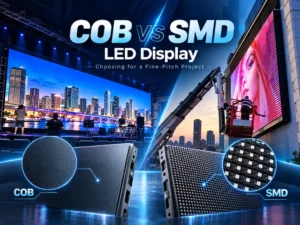
SMD modules held their three-in-one RGB diodes on the board surface, soldered in place and left exposed. That build gave wide viewing angles and kept repair at diode level. A failed diode could be located, and the module came out without disturbing its neighbours.
The surface paid for it. Diodes exposed to a lobby collected dust, took the first contact from a trolley or a cleaning cloth, and showed their wiring when the screen was read from close up.
COB bonded the diodes onto the board itself and laid a protective layer over the assembly. The finished surface sat flatter and shrugged off touch, dust and moisture. Close up, the read improved, because no wire or gap interrupted the diodes.
Repair moved up one level. A single diode was not replaced; the module was. The project priced spare modules instead of spare diodes, and the project specified the COB display solution for close-viewing walls as a configuration rather than a catalogue line.
GOB started from standard modules and added a protective layer over the module surface. The GOB display solution with module-level protection page describes that layer as protection against impact, dust, moisture and touch. Repair stayed at module level, and the surface forgave more where people could reach the screen.
Flip-chip COB turned the chip face down and did away with the wire bond. The heat path shortened and current handling improved. It changed nothing about the pitch decision, and it could not rescue a pitch chosen for the wrong viewing distance.
Pitch and viewing distance scaled together. Moving the closest viewer twice as far let a coarser pitch hold up. What the project had to settle was the factor applied to that distance, because content and the standard its designer followed changed the number. Published viewing-distance guidance from the major display makers differed on exactly that basis.
SYVISO builds both module types and quotes them against project conditions.
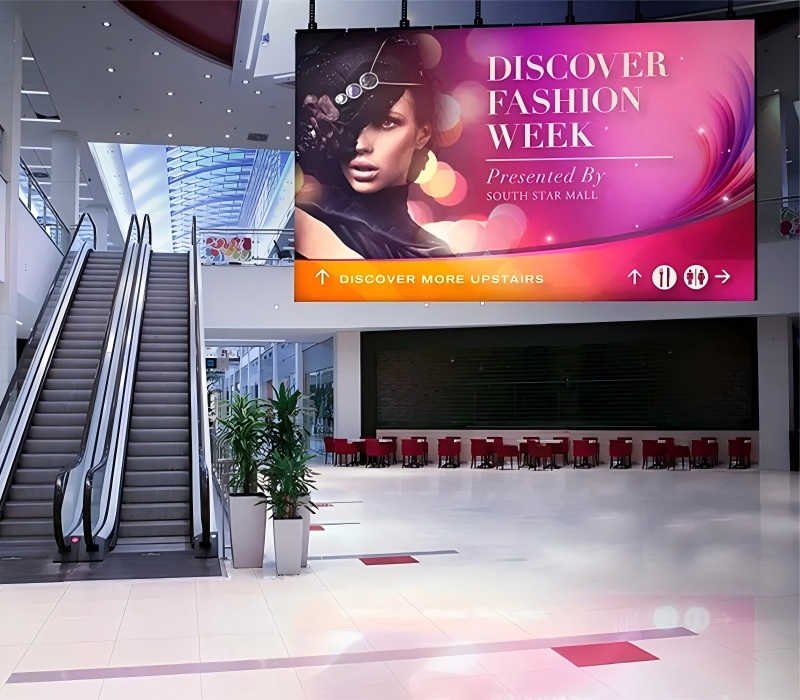
The wall sat above head height in a dry lobby. Cleaning came once a week, with a soft head on a pole. That room asked almost nothing of the module surface, which removed the case for paying for extra protection. Put the same wall behind a reception counter, inside a sports venue or along a night-cleaned corridor, and the decision moves the other way. The specifier wrote the room conditions down and attached them to the enquiry, so the answer came back against the actual site.
The structure sat against a corridor, and rear access did not exist. That single fact pushed the design towards front service, where a module comes out from the viewing side. The project also named the spare: one module at the exact pitch, held on site, with the maintenance team trained to swap it. On a mock frame the installer timed a swap at eleven minutes, working from the viewing side.

The wall ran a loop of full-motion brand video with small text. That content set the pitch floor, and the budget then had to cover pitch, surface protection and the spare module together. Buying the finest pitch available would have spent the allowance on the variable that mattered least in that room. The quote split into three lines, modules, structure and control, so the client could see which line moved when the pitch changed.
The quote request carried seven items: indoor or outdoor with the room described, the opening and any curve, closest and furthest viewing distance, the content type, the installation method, front or rear service access, and quantity with destination and delivery target. A supplier holding those seven could price a configuration. Missing one cost a round trip: the first draft of the brief left service access out, and the quote came back with two structures priced, one for each access method.
The surface choice repaired none of these: a pitch set for the wrong viewing distance, a control system that could not drive the required refresh, heat trapped behind a sealed structure. Each of those stayed a separate engineering decision.
Two checks settled the choice. The integrator requested a sample module at the proposed pitch and viewed it from the closest position with the real content, because pitch and content interacted more than the numbers suggested. Then the installer demonstrated a module swap on the actual structure and timed it. The sample module arrived at the proposed pitch, and ten minutes of real content on it settled the question.
The small pixel pitch display range covers the close-viewing work this choice belongs to.
The module surface answered a wear question: how the screen took touch, dust and cleaning, and how a failed module came out. It never answered the pitch question. Viewing distance, room conditions, service access and content set the requirement, and SMD, COB or GOB followed from those four inputs. The project added a spare module to the order and sent the project quote and requirement request with the seven inputs.
Q1: Is COB always better than SMD for a fine-pitch project?
A1: It was not on that lobby wall. COB gave a flatter, more protected surface. SMD modules cost less and kept diode-level repair, and a wall above head height serviced from the rear did not need the extra protection. Reachable surfaces and one-metre viewing push the other way.
Q2: What does GOB change if the module is still SMD?
A2: It lays a protective layer over the module surface, which cuts damage from impact, dust, moisture and touch. Repair stays at module level, and the surface copes better where trolleys reach it.
Q3: How does pixel pitch relate to the module type?
A3: They answer different questions. Pitch sets how close a viewer can stand before the image breaks up. The module type sets how the surface behaves and how a swap is performed. Fine pitch on an SMD module and a coarse pitch on a covered module are both ordinary configurations.

Hubungi SXLED
Siap mewujudkan visi Anda? Sebagai mitra terpercaya Anda untuk layar LED, kami menawarkan solusi yang disesuaikan, kompatibilitas terjamin, dan kinerja yang optimal untuk setiap proyek. Isi formulir, dan para ahli kami akan menghubungi Anda dengan penawaran khusus dalam waktu 24 jam.

Pengalaman Lebih dari 13 Tahun

Solusi yang Disesuaikan

Jaminan Kualitas yang Andal